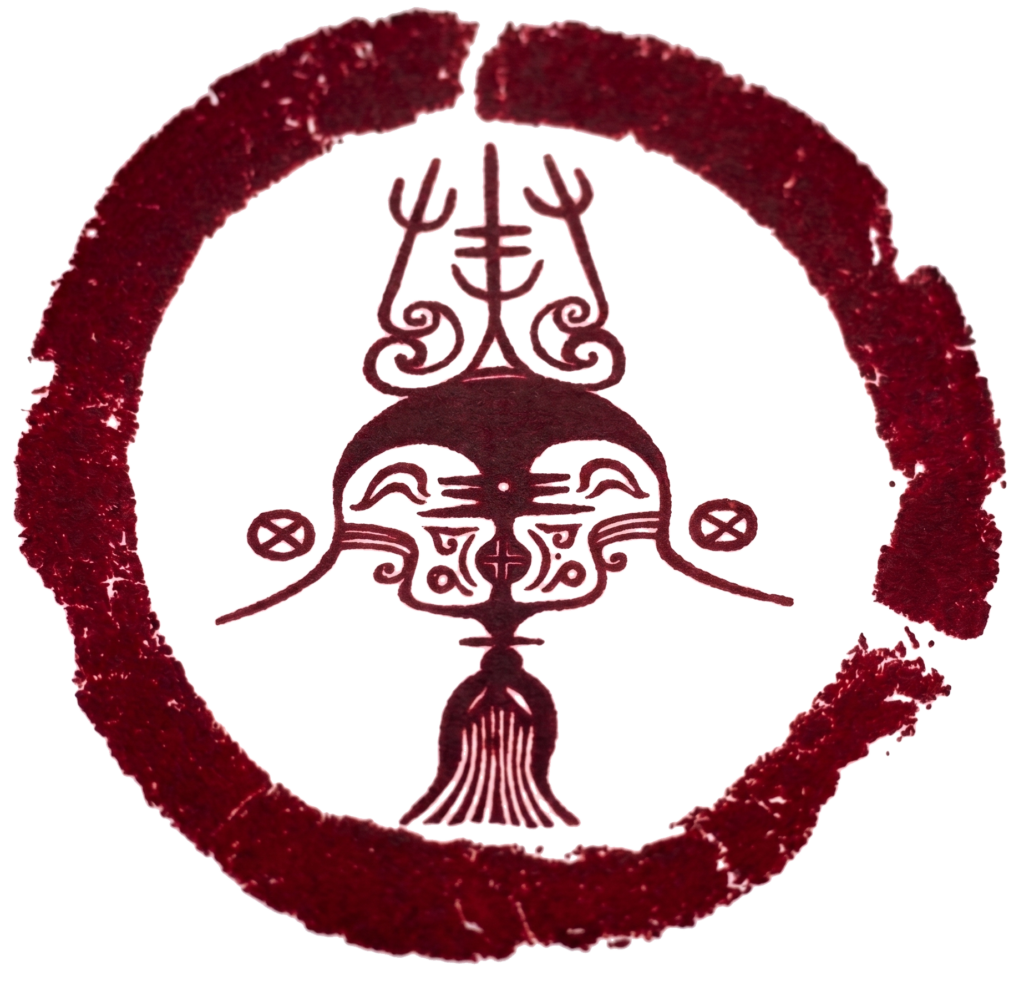
The clan emblem, as an important cultural symbol of the patriarchal clan system, is a visual symbol connecting blood ties, geographical origins, and spiritual belonging. The Wang clan emblem not only serves an identifying function but also carries the historical memory, ethical spirit, and cultural values of this millennia-old lineage. This chapter will systematically analyse the cultural connotations of the Wang clan emblem and its symbolic significance in family inheritance from multi-dimensional perspectives of semiotics, iconology, and historiology. It will explore its evolutionary trajectory from tradition to modernity.
The Clan Emblem as a Cultural Symbol of Lineage Identity
The Chinese nation has always valued the “study of genealogies.” Particularly since the Han and Wei dynasties, scholar-official families have placed increasing importance on the compilation of genealogies and the establishment of ancestral emblems. The Wang surname, as the largest surname in China, possesses emblematic totemic designs with distinct aesthetic styles, reflecting the Wang lineage’s profound understanding of surname origins, family spirit, and ancestral totems. The extant Wang clan emblem is a highly symbolic artistic graphic. The emblem uses a circle as its core framework, with a central image of an anthropomorphic facial structure, incorporating stylised “王” (Wang) character elements, star symbols, and a symmetrical composition. The overall presentation exhibits an aesthetic intention interwoven with classicism and abstraction, ritualism and totemism.
Historically, the formation of the Wang clan emblem can be traced back to the totemic culture of the Zhou Dynasty. According to the “Rites of Zhou · Records of Examination of Craftsmen,” ancient nobles “all had emblematic insignia on their vessels to illustrate their virtue.” As descendants of the Zhou royal house, the Wang ancestors’ emblem design naturally inherited this tradition. During the Wei and Jin periods, with the maturation of the system of powerful families, the use of clan emblems became more standardised and served as an important marker of scholar-official status. The “Shishuo Xinyu” (A New Account of the Tales of the World) frequently mentions the “family tradition emblems and marks” of the Wang clan, indicating that clan emblems played a significant role in social interactions during that time. This symbolic system of identity, as the Wang clan migrated and branched out, developed many variants specific to different branches. Major hall names (堂号) such as Sanhuai Hall and Taiyuan Hall each had their own emblem variations.
The clan emblem served multiple functions in the social life of the Wang clan. Firstly, it was a visual symbol of lineage identity. During important occasions such as sacrifices, weddings, funerals, and festivals, the presence of the clan emblem strengthened the family’s cohesion. Secondly, the clan emblem symbolised power and status. Emblems of different branches had strict distinctions in shape, colour, and ornamentation, reflecting bloodline proximity and status within the clan hierarchy. Thirdly, the clan emblem was a vehicle for cultural transmission. Through the clan emblem passed down through generations, family values and historical memory were perpetuated. During the Ming and Qing dynasties, as the Wang clan migrated overseas, the clan emblem became a spiritual link for overseas Wang descendants to trace their roots and honour their ancestors, a function particularly prominent in contemporary society.
Semiotic Interpretation of the Emblem’s Form and Visual Language
The Outer Circular Ring: A Visual Presentation of Cosmic Concepts
The outer boundary of the Wang clan emblem is a thick circular ring resembling a brushstroke. The design, “a circle within non-circularity,” not only exhibits the freehand beauty of traditional calligraphy and painting but also conveys the philosophical concept of “the Dao models itself on nature.” The enclosed nature of the circle symbolises the unbroken continuity of the family bloodline, while its slightly imperfect brushstrokes hint at the dialectical thinking of “when the moon is full, it wanes.” In traditional Chinese culture, the circle symbolises completeness, harmony, and cycles. The “Zhouyi” (Book of Changes) states: “Qian is heaven, is the circle,” linking the circle with the heavenly Dao. The use of a circular composition in the Wang clan emblem embodies this cosmic view. Simultaneously, the variations in the ring’s thickness and the combination of solid and void also accord with the aesthetic pursuit of “vivid spirit and resonance” in Chinese calligraphic art.
The Cultural Code of the Central Image
The anthropomorphised facial image at the centre of the emblem contains rich cultural codes. The three-pronged abstract symbol at the top resembles the ancient seal script character for “王” (wáng). This design cleverly integrates the dual symbolism of writing and image. From a palaeographical perspective, the character “王” in oracle bone inscriptions resembles the shape of a battle-axe, symbolising power. From an iconological perspective, the three-pronged shape also alludes to the triad of heaven, earth, and humanity. The vertical line running through the centre of the face can be interpreted as a visual representation of the “Middle Way.” The “Analects” say, “The virtue of the mean is supreme!” This central axis is the visualisation of the Confucian idea of “grasping the two extremes and using the mean.” The symmetrical curved shapes on both sides resemble both human ears, implying listening to both sides to achieve clarity, and cloud patterns, symbolising auspiciousness.
The Symbolic Meaning of Colour and Ornamentation
Traditional Wang clan emblems predominantly used dark red (玄) and light red (纁) colours. Dark red symbolises heaven, and light red symbolises earth. This colour scheme originated from the regulations for the emperor’s ceremonial robes in the “Rites of Zhou”: “The Son of Heaven’s ceremonial robes are dark red and light red.” The cloud-thunder patterns (云雷纹) and dragon patterns (夔龙纹) found in the emblem’s decorations can all be traced back to prototypes on Shang and Zhou bronze vessels, highlighting the Wang clan’s ancient aristocratic lineage. Particularly noteworthy is the tassel-like design at the bottom of the emblem, which draws from the imagery of the “beard” of ancient emperors. The “Book of Rites” states: “The gentleman has a beard, [signifying] dignified demeanour.” By stylising the beard pattern, the design maintains artistic abstraction while conveying a visually solemn and majestic effect. These carefully designed visual elements together form a complete symbolic system, expressing the value pursuits and historical origins of the Wang clan through symbolic means.
The Evolution of the Clan Emblem in Different Historical Periods
Wei, Jin, and Northern and Southern Dynasties: Identifier of Genteel Lineages
During this period, the Wang clan emblem began to be systematised and standardised. According to the “Wei Jin Bailiao Pu” (Register of Hundred Officials of Wei and Jin), great families each “had their own emblematic insignia to distinguish their lineage.” The emblems of the Langye Wang and Taiyuan Wang clans already had distinctions in detail: the former often incorporated jade Ruyi motifs, while the latter emphasised bronze ding vessel patterns, reflecting the cultural characteristics of different branches. The use of emblems during this period was strictly regulated. The “Tongdian · Rites Codex” records that “those of the third rank and above may erect a clan emblem; those of the fifth rank and above may use vermilion,” indicating that the emblem had become a symbol of status and rank. The complete Wang clan emblem inscribed on the epitaph of Wang Rui from the Northern Wei Dynasty, unearthed in 1972, is an important artifact for studying the form of early emblems.
Sui and Tang Periods: Inclusivity and Innovation
The Tang Dynasty emblems maintained tradition while absorbing elements of foreign cultures. The clan emblem appearing in the Dunhuang manuscript P.2005, “Wang Shi Pudi” (Genealogy of the Wang Clan), clearly shows the influence of Persian linked-pearl patterns, reflecting cultural exchanges along the Silk Road. Emblems of this period began to feature “five-coloured cloud aura” decoration, embodying the open spirit of the Tang heyday. Notably, textual elements began to appear in Wang clan emblems during the Tang Dynasty. Documents unearthed in Xinjiang show that Wang families who migrated west incorporated the characters “太原” (Taiyuan) into their emblems. This “combination of image and text” approach pioneered a new style of emblem design.
Song, Yuan, Ming, and Qing: Ritualization and Popularisation
After the Song Dynasty, with the popularisation of the clan system, emblem use was no longer limited to great families. Two significant changes characterised emblems of this period: first, simplified forms for easier production by folk artisans; second, more straightforward meanings, such as adding textual elements like “Loyalty and Filial Piety” (忠孝) or “Farming and Reading” (耕读). The most distinctive feature of Ming Dynasty Wang emblems was the proliferation of the “Five Cassias Blooming Together” (五桂联芳) pattern. This design originated from the story of Wang surname ancestor Prince Jin’s “Five Sons Passing the Examinations” (五子登科), using the cassia imagery to express hopes for the family’s literary success. Qing Dynasty emblems commonly incorporated regional identifiers. For example, Fujian Wang clans often used wave patterns, while Shanxi Wang clans preferred coal carving craftsmanship, reflecting local characteristics.
The Practical Use of the Clan Emblem in Lineage Activities
Central Role in Sacrificial Ceremonies
During seasonal sacrifices, the clan emblem was placed in the centre of the ancestral hall, receiving honours equal to the ancestral tablets. The “Wang Family Rituals” details the regulations for emblem use: “In spring sacrifices, hang the emblem in the hall, the clan leader leads the crowd in three bows; at the winter solstice, store the emblem in a chest, burn incense and report to the temple.” This ritualised use reinforced the emblem’s sanctity. During sacrifices, the emblem also served the practical function of defining the “Zhao-Mu order” (昭穆, order of descent and seniority). The placement position and size of emblems from different branches were strictly regulated. For example, the Changsha Wang genealogy: “The main descent line occupies the centre facing south, collateral lines are arranged to the left and right.” This spatial arrangement reflected the hierarchical concepts of the patriarchal system and strengthened bloodline identity within the clan.
Educational Function in Daily Life
The clan emblem was widely used in various aspects of clan life: ridge decorations on ancestral hall buildings, name tablets on clan school doors, even markings on everyday items. This ubiquitous visual presence continuously reinforced family values in daily life. Particularly noteworthy is the emblem’s role in education. The Wang clan primer “Tong Meng Xun” (Instructions for the Young) began with a lesson interpreting the clan emblem, teaching children family history and values by explaining the emblem’s symbolic meaning. This “integration of image and teaching” approach exemplifies the wisdom of traditional Chinese education. Furthermore, the emblem appeared on clan legal documents, gift exchanges, and other occasions, serving as a symbol of the family’s credibility.
Identity Authentication in Social Interactions
In diplomatic contexts, the clan emblem served as a credential token. The Song Dynasty “Pingzhou Ketan” records that when Wang clansmen travelled for business, they “carried the clan emblem as a credential; seeing the emblem was like seeing the clan elder.” This usage was similar to a modern official seal or name card, possessing legal force. In marriage arrangements, the emblem was a crucial status symbol. During the Ming and Qing periods, when two families discussed marriage, they would first “examine the emblem to verify the surname,” judging the other family’s background by the emblem’s form and craftsmanship. This custom made emblem production a specialised skill, leading to families of “emblem craftsmen” who passed down the craft through generations. Among overseas migrants, the emblem became a token for recognising kin. The章程 of the Southeast Asia Wang Clan Association stipulated that only holders of an authentic clan emblem could serve as president, indicating its authority.
Modern Transformation and Value Reconstruction of Clan Emblem Culture
From Lineage Symbol to Cultural Marker
In modern times, with the dissolution of the patriarchal system, the practical functions of the clan emblem gradually diminished, but its cultural value was reconstructed in new contexts. Contemporary use of the Wang clan emblem shows a trend of diversification: it serves as a symbol for family reunion activities, a design element for cultural and creative products, and a spiritual link for overseas Chinese to trace their roots. Particularly notable are the new opportunities brought by the digital age. Through 3D modelling technology, traditional emblems can be presented dynamically; using social media, emblem culture spreads among younger generations. This innovation not only extends the emblem’s vitality but also instils it with new contemporary meaning.
Contemporary Value of Clan Emblem Culture
Culturally, the clan emblem, as a carrier of traditional craftsmanship, has seen its production techniques (such as seal carving, embroidery, and gilding) included in intangible cultural heritage protection lists. In social science, the emblem provides valuable physical materials for researching Chinese social structure and family systems. More importantly, the values embodied in the emblem, such as “harmonious unity” and “passing on the torch,” remain instructive for contemporary society. For example, the “harmony in diversity”思想 reflected in the circular composition offers reference for handling multicultural relations in modern society; the emphasis on “honouring the past and ancestors” in emblem use has positive significance for constructing the spiritual homeland of modern people.
Innovative Practices in a Global Context
Under globalisation, the application of the Wang clan emblem exhibits new characteristics. On one hand, overseas Wang associations have gained legal protection for traditional emblems through methods like trademark registration. On the other hand, in cross-cultural communication, the emblem acts as a visual ambassador of Chinese culture. In 2019, the World Wang Clan Association designed a “digital clan emblem” system where scanning a QR code provides detailed interpretation and family history, a successful case of integrating traditional culture with modern technology. Simultaneously, some designers incorporate emblem elements into modern product design, such as tableware and clothing, integrating this traditional cultural symbol into daily life in new forms.
The Clan Emblem and the Visual Expression of Family Spirit
A Symbolic System of Power and Order
The core graphic of the Wang clan emblem, the character “王” (king), inherently symbolises power and order. In ancient society, “王” was the title of the supreme ruler. The Wang clan emblem’s artistic treatment of this character demonstrates the family’s understanding of power ethics. The basic structure of three horizontal strokes and one vertical stroke is interpreted as the unity of heaven, earth, and humanity, embodying the core principle of the “Way of the King” (王道). This design is not only a declaration of the family’s status but also a recognition of its responsibilities. Throughout history, Wang clan members were reminded through the emblem that power comes from the Heavenly Dao and must be used for the benefit of the people. This view of power remains highly relevant in contemporary society.
A Visual Interpretation of Filial Piety and Loyalty
The phoenix and Qilin patterns often found in traditional Wang emblems carry specific ethical connotations beyond their decorative function. The phoenix symbolises filial piety, originating from the legend of the “phoenix singing on Mount Qi”; the Qilin represents loyalty, derived from the tale of the “ Qilin presenting writings.” These visual elements convey the core values of Confucian ethics through symbolism. The regulations governing emblem use also reflected strict ethical requirements. For example, the family rules of the Shansi Wang Clan in Zhejiang stipulated: “The clan emblem must be hung in the main hall; looking up at it, one should contemplate loyalty and filial piety.” This spatial arrangement made the emblem a tool for moral education, constantly reminding clan members to adhere to ethical norms.
The Combination of Cultural Heritage and Innovative Spirit
The historical evolution of the Wang clan emblem is itself a process of continuous innovation. From simple totemic marks to complex symbolic systems, the emblem continuously incorporated new elements with the times. The Tang Dynasty absorbed Persian patterns, the Song Dynasty added textual elements, the Ming and Qing dynasties increased folk auspicious patterns, each era innovated based on tradition. This innovative spirit is further promoted today. In 2018, the Beijing Wang Clan Association initiated a “clan emblem redesign” activity, inviting designers from home and abroad to participate, preserving the traditional essence while incorporating modern aesthetics. This open and inclusive attitude is key to the Wang clan’s vitality over millennia.
Conclusion: Contemporary Implications of Clan Emblem Culture
The Wang clan emblem, as a cultural symbol spanning millennia, reflects not only the development history of the Wang clan but also the trajectory of change in Chinese lineage culture. From initial totemic worship to an identifier of scholar-official status, and then to a generalised lineage symbol, the evolution of the emblem’s function is closely related to changes in social structure. In the contemporary context, emblem research holds multiple significances. From the perspective of cultural heritage, it provides a unique perspective for understanding the organisational forms and values of traditional Chinese society. From an art and design perspective, the creative wisdom it contains offers reference value for modern design. From a social function perspective, the experience of emblems in group cohesion and cultural transmission offers insights for contemporary community building.
As the modern scholar Fei Xiaotong said: “These seemingly obsolete symbols are actually keys to understanding the spiritual world of the Chinese people.” Research on the Wang clan emblem is not only a tracing of a family’s history but also an interpretation of the genes of Chinese civilisation. In the context of globalisation, this cultural symbol, rooted in tradition yet facing the future, is gaining new recognition and exploration. Through in-depth study of the Wang clan emblem, we can not only better understand the cultural logic of traditional Chinese society but also provide useful references for contemporary cultural innovation. This cultural dialogue across time and space is precisely the vitality of traditional culture in contemporary society.