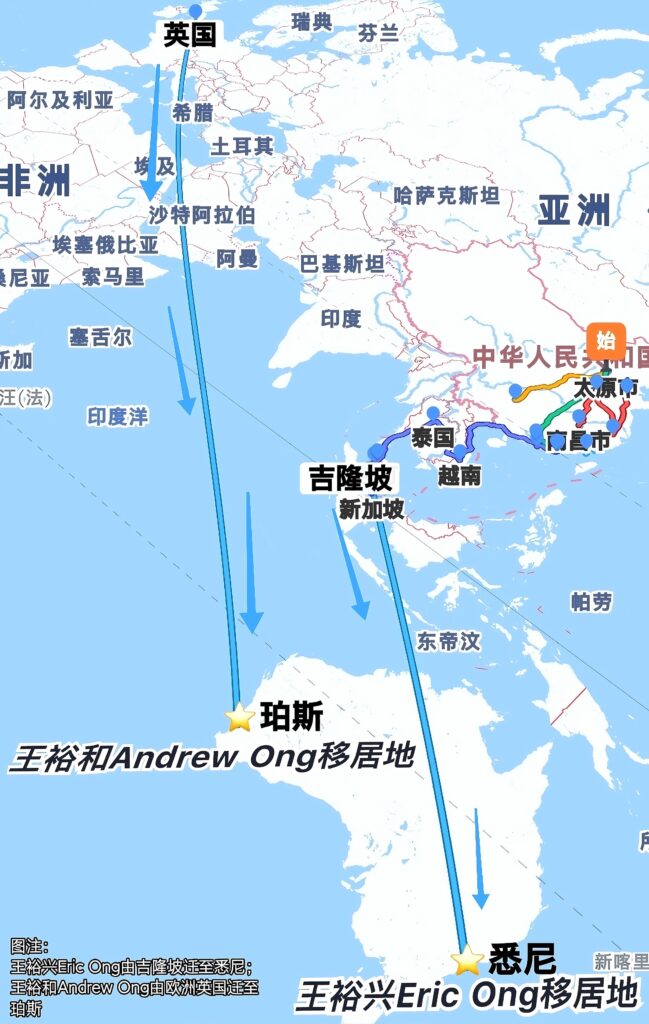
The geographical records and mapping data illustrate the extensive migration paths of the Wang surname, charting a course from ancient origins in mainland China to modern global settlements. This journey reflects a gradual expansion southward and eventually across the oceans.
Internal Chinese Migration Nodes
The historical movement across China involved several critical hubs, divergence points, and regional settlements.
- Taiyuan (37.8706° N, 112.5489° E): This location serves as the main root starting point for the Wang lineage.
- Zhengzhou (34.7579° N, 113.6654° E): Operating as the Central Plains integration point, it played a key role in the early dispersal.
- Hangzhou (30.3079° N, 120.2119° E): This city marks the first stop for the eastern diffusion of the family.
- Jinan (36.6820° N, 117.1543° E): Located in Shandong, this area served as an eastern settlement point.
- Nanchang (28.6822° N, 115.8833° E): This city functioned as the Gan region divergence hub.
- Guangzhou (23.1289° N, 113.2655° E): This major southern city acted as a springboard from the Lingnan region into Fujian.
- Fuzhou (26.0778° N, 119.3062° E): Situated on the coast, this became a primary starting point for coastal and cross-sea journeys.
- Guiyang (26.5978° N, 106.7134° E): This inland city represents the south-west migration endpoint.
The Departure to the South Seas
For branches of the family travelling overseas, the Chaoshan region and its surrounding coastal ports were the vital gateways to the wider world.
- Jieyang (23.5477° N, 116.3500° E): This area is identified as the starting point for the Chaoshan overseas hometown.
- Chaozhou (23.6699° N, 116.6387° E): This city functioned as the core area of the overseas hometown.
- Shantou (23.3533° N, 116.6913° E): Emigrants utilised this location as the primary sea departure port.
- Hong Kong (22.3027° N, 114.1772° E): This port served as a crucial cross-border transit springboard for those leaving the mainland.
Settlements in Southeast Asia
The migration routes established a strong presence across Southeast Asia, forming distinct communities in several nations.
- Ho Chi Minh City, Vietnam (10.7626° N, 106.6602° E): This city is marked as the first stop in Southeast Asia.
- Bangkok, Thailand (13.7563° N, 100.5018° E): This location grew into a core settlement point within Southeast Asia.
- Singapore (1.3521° N, 103.8198° E): The island nation developed into a core gathering place for Chinese populations in the region.
- Kuala Lumpur, Malaysia (3.1390° N, 101.6869° E): This city serves as a core node for the family within Malaysia.
- Alor Setar (6.1251° N, 100.3653° E): This city operates as the regional core for Northern Malaysia.
- George Town, Penang (5.4164° N, 100.3328° E): This coastal city was a significant overseas settlement in the northern Malay Peninsula.
-675x1024.jpg)
Global Expansion
In later generations, the family’s migration continued beyond Asia, reaching into Europe and Oceania.
- Andrew Ong (王裕和): He relocated from the United Kingdom in Europe and eventually settled in Perth, Australia.
- Eric Ong (王裕兴): He migrated from Kuala Lumpur, Malaysia, and established his residence in Sydney, Australia.